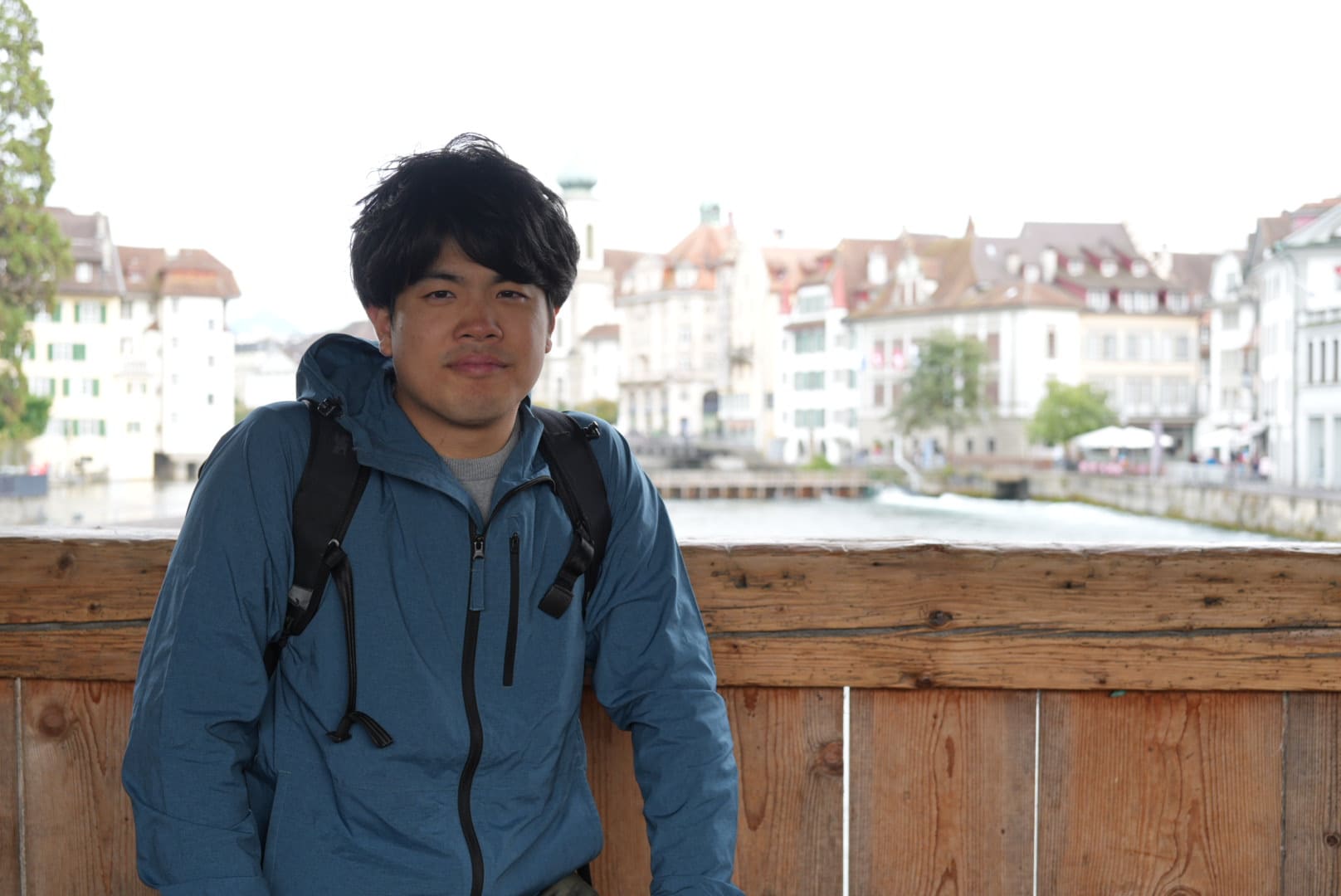
Kazuki Nakajima (中嶋 一貴)
Assistant Professor
Graduate School of Systems Design
Tokyo Metropolitan University, Japan
Email: nakajima [at] tmu.ac.jp
CV |
Google Scholar |
GitHub |
ORCID |
researchmap
Go to Japanese page
About
I am interested in complex systems involving humans. My research aims to accurately understand the structure and dynamics of society from two perspectives: statistical analysis of complex networks and metascience based on large-scale bibliographic data. See the Research page for details.
I received my Ph.D. (Doctor of Science) from Tokyo Institute of Technology in September 2022. I was then a JSPS Research Fellow (PD) and a postdoctoral researcher at the University at Buffalo, State University of New York, until March 2023, and have been in my current position since April 2023.
Keywords: network science, complex networks, social networks, metascience, science of science
News
-
(2026/10) New preprint is on arXiv.
Large Language Model Turnover Undermines Screening for Artificial Intelligence-Assisted Scientific Writing.
Kazuki Nakajima and Takayuki Mizuno. -
(2026/08) New preprint is on arXiv.
Declining Modularity of Intellectual Bases During the Emergence of Research Areas.
Kazuki Nakajima, Yuya Sasaki, and Masaki Aida. - (2026/06) Released an interactive web app for visualizing researcher population pyramids.
-
(2026/05) Poster presentation at ICSSI 2026.
Researcher Population Pyramids for Tracking Cross-National Demographics and Gender Balance.
Kazuki Nakajima and Takayuki Mizuno. -
(2026/03) Our paper has been accepted for Scientometrics.
Systemic Gendered Citation Imbalance in Computer Science: Evidence from Conferences and Journals.
Kazuki Nakajima, Yuya Sasaki, Sohei Tokuno, and George Fletcher. -
(2026/02) Our paper has been accepted for PNAS Nexus.
Researcher Population Pyramids: Tracking Demographic and Gender Trajectories Across Countries.
Kazuki Nakajima and Takayuki Mizuno.
-
(2026/02) Oral presentation at NetSci 2026.
Stochastic block model reveals multi-order block structure of higher-order networks.
Kazuki Nakajima, Yuya Sasaki, Takeaki Uno, Masaki Aida. -
(2025/11) New preprint is on arXiv.
Learning Multi-Order Block Structure in Higher-Order Networks.
Kazuki Nakajima, Yuya Sasaki, Takeaki Uno, Masaki Aida. -
(2025/11) Oral presentation at NetSciX 2026.
Multi-Order Hypergraph Stochastic Block Model.
Kazuki Nakajima, Yuya Sasaki, Takeaki Uno, Masaki Aida. -
(2025/11) Oral presentation at Complex Networks 2025.
A document co-citation study of higher-order network science.
Kazuki Nakajima, Yuya Sasaki and Masaki Aida.
Older news
-
(2025/07) Oral presentation at CCS 2025.
Projecting Global Shifts in Scholarly Maturity and Gender Balance in Academia.
Kazuki Nakajima and Takayuki Mizuno. -
(2025/07) New preprint is on arXiv.
Researcher Population Pyramids for Tracking Global Demographic and Gender Trajectories.
Kazuki Nakajima and Takayuki Mizuno. -
(2025/04) Our paper has been accepted for Applied Network Science.
Sampling nodes and hyperedges via random walks on large hypergraphs.
Kazuki Nakajima, Masanao Kodakari, and Masaki Aida.
-
(2025/03) Oral presentation at WAW 2025.
Hypergraph sampling via random walk and its application to OpenAlex database.
Kazuki Nakajima, Masanao Kodakari, and Masaki Aida. -
(2025/01) Oral presentation at NetSci 2025.
Quantitative analysis of citation imbalance in computer science using reference models.
Kazuki Nakajima, Yuya Sasaki, Sohei Tokuno, and George Fletcher. -
(2025/01) Our paper has been accepted for Social Network Analysis and Mining.
Inference and Visualization of Community Structure in Attributed Hypergraphs Using Mixed-Membership Stochastic Block Models.
Kazuki Nakajima and Takeaki Uno.
[paper] -
(2024/12) Delivered an oral presentation at Complex Networks 2024.
-
Inference and visualization of community structure in grant collaboration hypergraphs.
Kazuki Nakajima and Takeaki Uno.
-
Inference and visualization of community structure in grant collaboration hypergraphs.
-
(2024/10) Delivered a poster presentation at AIES 2024.
Quantifying gendered citation imbalance in computer science conferences.
Kazuki Nakajima, Yuya Sasaki, Sohei Tokuno, and George Fletcher. -
(2024/10) Our two conference papers have been accepted for Complex Networks 2024.
-
Inference and visualization of community structure in grant collaboration hypergraphs.
Kazuki Nakajima and Takeaki Uno.
-
Estimating hyperedge size distribution via random walk on hypergraphs.
Masanao Kodakari, Kazuki Nakajima, and Masaki Aida.
-
Inference and visualization of community structure in grant collaboration hypergraphs.
- (2024/10) Implemented Python code with numba for hyper dK-series, which is 20-30 times faster than the previous version for the parameter d_v = 2 and 2.5 and achieves comparable generation time for C++ code. Randomized instances generated by the hyper dK-series in Python can be converted to the Hypergraph object of HyperNetX.
-
(2024/09) Our paper has been accepted for IEEE Access.
Efficient intervention in the spread of misinformation in social networks.
Takumi Sakiyama, Kazuki Nakajima, and Masaki Aida.
[paper] -
(2024/09) Delivered a poster presentation at CCS 2024.
Non-strong community structure in collaborative research grant hypergraphs.
Kazuki Nakajima and Takeaki Uno. -
(2024/08) Our new paper is on arXiv.
Quantifying gendered citation imbalance in computer science conferences.
Kazuki Nakajima, Yuya Sasaki, Sohei Tokuno, and George Fletcher. -
(2024/07) Our paper has been accepted for AIES 2024.
Quantifying gendered citation imbalance in computer science conferences.
Kazuki Nakajima, Yuya Sasaki, Sohei Tokuno, and George Fletcher.
[paper] -
(2024/07) Delivered a poster presentation at ICSSI 2024.
Quantifying citation imbalance in computer science: Gender and conference tier.
Kazuki Nakajima and Yuya Sasaki. -
(2024/06) Delivered an oral presentation on the latest work at NetSci 2024.
HyperNEO: Inference of community structure in attributed hypergraphs.
Kazuki Nakajima and Takeaki Uno. (2024). [arXiv]